The Journey to Reconciliation
27 May
1
min read

Written by Matt McQuade for Kings Media
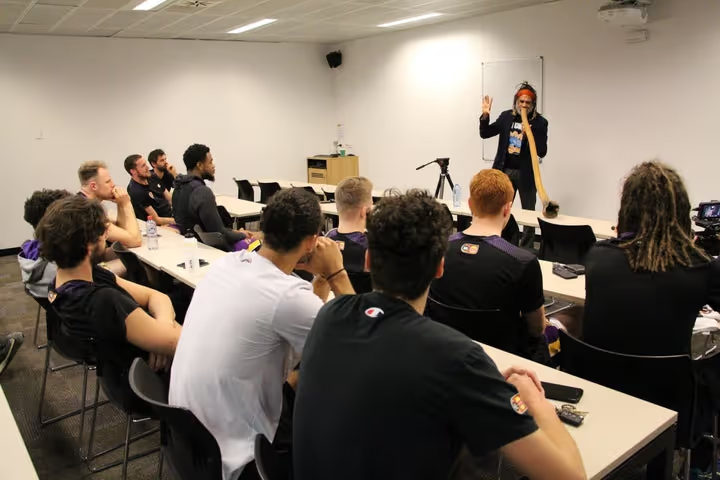
The NBL celebrates Indigenous Round this week, and even though it is a relatively new initiative that is only in its second year, it has already become an important time in the calendar.
Highlighting societal issues affecting Aboriginal and Torres Strait Islander people, NBL Indigenous Round also pays tribute to the tremendous impact that Indigenous players have made to the sport of basketball in this country over many decades.
From the first Indigenous basketball Olympian, the great Michael AhMatt, who represented his country at the 1964 Games in Tokyo, to the legendary Danny Morseu, who won three NBL championships and was a two-time Olympian, and in recent times a giant in Nathan Jawai and one of the superstars of world basketball in Patrick Mills, among many others – the influence of Indigenous ballplayers has been profound over many years in Australian basketball.
In Sydney, the basketball connection with the Indigenous community runs deep. At an elite level, Claude Williams made history as the first – and to date, only – Indigenous coach of an NBL team, the Sydney Kings foundation squad, in 1988. Graham Davis played nine games for that team and both James Trustrum and William McDowell-White have also spent time with the purple and gold.
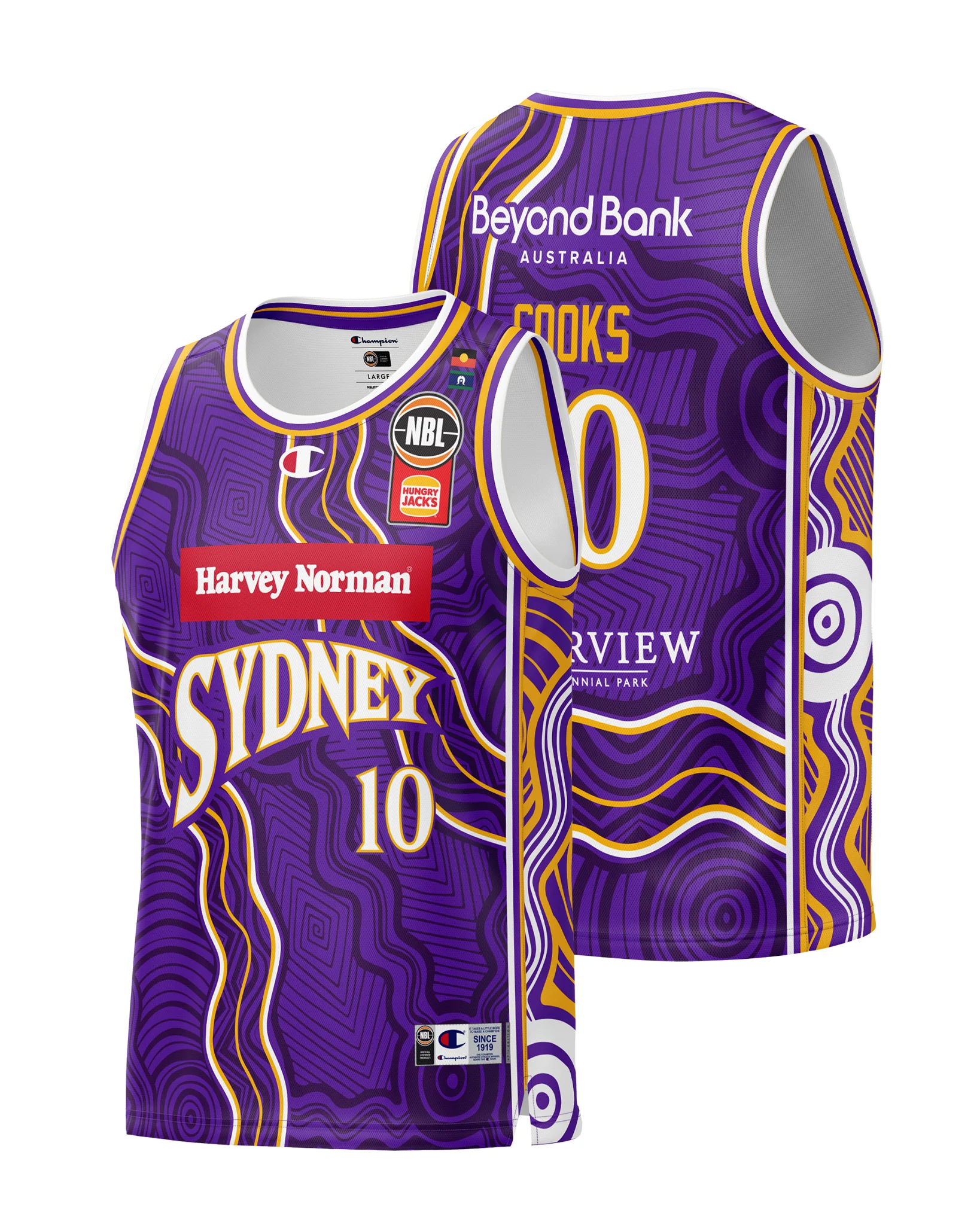
During every Indigenous Round, what fans see on the surface is each club’s Indigenous jersey, and this year, the Brydens Lawyers Sydney Kings will roll out a spectacular version.
Designed by Bruce Shillingsworth Snr, a Murawari-Budgiti man from north-western New South Wales, the jersey depicts a gathering of various members of the Wangal People along the Parramatta River, highlighting three clan groups consisting of men, women and children sitting around the campfire, with all individuals and clan groups in the design protected and brought together by yellow and purple spirits.
It is an outstanding piece of artwork and a great tribute to Indigenous culture. But it’s just a small part of the work the Brydens Lawyers Sydney Kings have initiated with Aboriginal and Torres Strait Islander communities.
To start with, the club has established a partnership with the Aboriginal Health and Medical Research Council of NSW (AH&MRC). And in December last year, the organisation through both their men’s and women’s teams unveiled their first Reconciliation Action Program (RAP), a plan that underpins the commitment of the Brydens Lawyers Sydney Kings and Flames to positively influence the lives of all Indigenous Australians.
In concert with the extensive work the club is doing with AH&MRC, the organisation also embraced an initiative targeted at improving the health and wellbeing of Indigenous and non-Indigenous youth – the Healthy Deadly Kids (HDK) program.
Created in large part by Kane Ellis, the CEO of the Illawarra Aboriginal Medical Service, and developed and run by Indigenous Australians, HDK is a primary school healthy living education program taught to children of all origins. Currently delivered in primary school classrooms with the goal to bring online and make available to all Australian kids, it uses basketball as a platform to educate, help foster positive change, and encourage participation and elite development in a segment of this country that has provided so much to basketball and sport in general.
One man heavily involved in the day-to-day running of HDK, as well as a host of other community programs within the organisation, is former Illawarra Hawks player and Head Coach Matt Flinn, who joined the Brydens Lawyers Sydney Kings in the NBL21 offseason.
During his many years at the Hawks, Matt developed an immense passion for working with the Indigenous community and did tremendous work in that space. In fact, he and Tyson Demos, alongside Kane Ellis, were responsible in large part for the creation of the NBL’s first Indigenous game three years ago – an event that would turn out to be so successful and so well-conceived that the league was pushed to follow the lead of the AFL and NRL and establish its own Indigenous Round.
So, it’s no surprise that Matt’s addition to the off-court staff at the Kings and Flames to help direct these all-important Indigenous programs – alongside another former Hawk and an Indigenous athlete himself in Tyson Demos – has been a key pillar of the club’s overall community strategy.
Matt has already made a significant impact to the club’s work off the floor and Brydens Lawyers Sydney Kings CEO Chris Pongrass is thrilled to have him on board.
“Flinny has been around the game for a long period of time and he’s forged fantastic relationships,” Pongrass said.
“But in my short time working with him and knowing him, I knew his relationships in the community space; his passion for both the community and Indigenous work that he’s been able to do – that’s been enlightening for me to be able to see that.”
“He thrives in that role, and I think that the tie-in between the community and the Indigenous aspects and how it relates to basketball is like a perfect mesh of the two that he’s so skilled and well-versed and passionate about all of it.”
“It was a no-brainer in our eyes to bring someone like him into the fold. It’s exciting to have someone who’s so entrenched in Australian basketball but specifically in the greater Sydney and Illawarra region to want to come and work with us.”
For his part, Matt couldn’t be happier to take up such an important role with the Kings and Flames as the organisation seeks to bring a greater understanding of Indigenous culture, enhance the lives of First Nations’ peoples and provide pathways for further Indigenous representation at the elite levels of basketball, all the way through the NBL and WNBL to the NBA and WNBA.
“It’s huge,” Matt said.
“It’s unbelievably humbling and I owe the Kings so much in identifying the work we were doing in creating a pathway.”
“More importantly, the club as a whole want to go down this journey too.”
“The people at the very top of the organisation – Paul Smith, Paul Kind, Chris Pongrass and Dani Heptonstall – are driving this and it filters down to the rest of the staff.
“Organisations have been trying to partner with AH&MRC for years, but they are very cautious in nature. The fact they have gone through this process with us, and are still standing shoulder to shoulder with us, is testament in itself to the path the Kings are on.”
“Without a doubt, we are leading the way in the NBL in that space of reconciliation, and we’re only just getting started. I’m humbled and proud to be a part of it.”
Working closely with Kane Ellis and Tyson Demos, Flinn’s work covers a wide range of activities, all designed to develop closer ties with First Nations peoples and establish the Brydens Lawyers Sydney Kings as a trusted partner in the Indigenous community.
“Kane Ellis has been one of the architects of all this,” Matt said.
“He’s been an amazing supporter, friend and a great partner in these programs.”
“We piloted the HDK program ironically at Paul Smith’s old primary school in Warilla, and we’re still out there. The kids really get a kick out of it.”
“We’ve got the Reflect RAP, and there’s a lot of process involved in developing the RAP. We’ve had a lot of honest conversations with our Indigenous brothers and sisters around the RAP – you can’t have a RAP and just talk about it; you have to actually live it and walk the walk.”
“It’s all about sharing. What I’ve learned in particular is always communicate and don’t be afraid to ask questions when you don’t know something.”
Sydney’s outreach in the Indigenous space is a work in progress, but is something that means a great deal to the organisation as it seeks to become both a leader in community programs and a place to facilitate the hopes and dreams of talented Indigenous athletes as they strive to become the best they can be.
“We’ve established some beliefs in this space in what we want to do and what we want to be as a club,” Chris Pongrass said.
“Launching our first Reconciliation Action Plan; launching Healthy Deadly Kids – again, people like Matt Flinn, Joel Cama and Tyson Demos have been crucial in pushing those programs and initiatives to the level they are performing at today.”
“But we’re just at the first step and we’ve got a long way to go. We’re really excited about where we see those programs trending, and the more we can do in this space to make a genuine difference in the lives of young Australians, young Indigenous Australians and the Indigenous community as a whole, the better.”
And from the perspective of a highly respected Indigenous leader in Kane Ellis, the work the Kings have begun to undertake with First Nations peoples is of paramount importance to fostering greater understanding of Indigenous culture. Kane is also thrilled to be working alongside Matt Flinn as a partner in this crucial journey of recognition and reconciliation.
“I see Flinny like a brother now,” Kane said.
“We’ve been through a journey over the past couple of years and his commitment to what we want to do is extraordinary.”
“His belief and his understanding of what we are doing and how we are doing it – you just can’t put a price on it and he goes above and beyond.”
“It means so much to me, but more importantly the young ones who are benefiting from the programs we are running in partnership with the Kings.”
“And the work is already making an impact in the community. As an example, we run the HDK program in one school in Wollongong, and the feedback we are getting there is great, where parents are writing to us and saying that their children come away from our program more positive about school and nutrition and mental health.”
“Those conversations kids have with their mum and dad are why we do what we do.”
In concert with the day-to-day management of all the organisation’s community and Indigenous programs, the Club has appointed an Indigenous Advisory Committee who will help guide key decisions and oversee the delivery of the organisations RAP goals, which includes the Healthy Deadly Kids program. Indigenous leaders Kane Ellis, Bruce Shillingsworth, Jamie Soward and Cain Slater are joined on the committee by Paul Smith and former Kings’ captain and TSE staff member, Kevin Lisch.
The Kings will wear their 2021 Indigenous jerseys at this Saturday’s blockbuster matchup with Melbourne United at Qudos Bank Arena. Tipoff is at 8:00pm AEST and tickets are on sale via Ticketek.
Rise With Us Sydney.

7 Jul
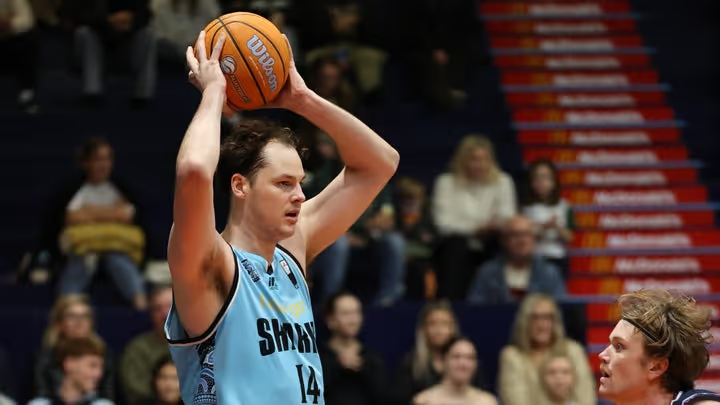
Hoops Capital to host exclusive Josh Giddey sessions
7 Jul
Hoops Capital off-season wrap (July 7)
Jason Spurgin
7 Jul
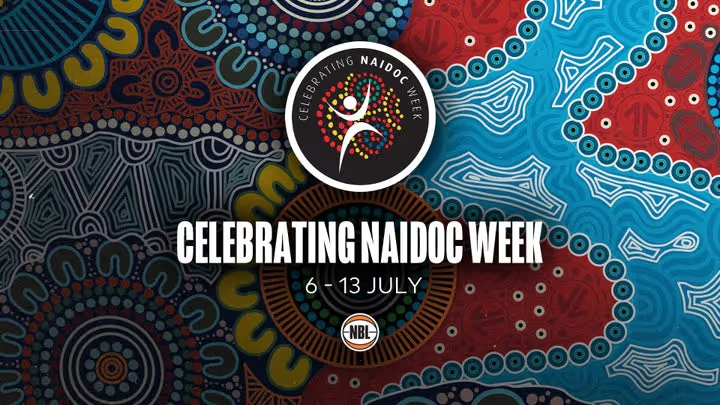
NBL celebrates NAIDOC Week with 'The Next Generation' in mind
7 Jul
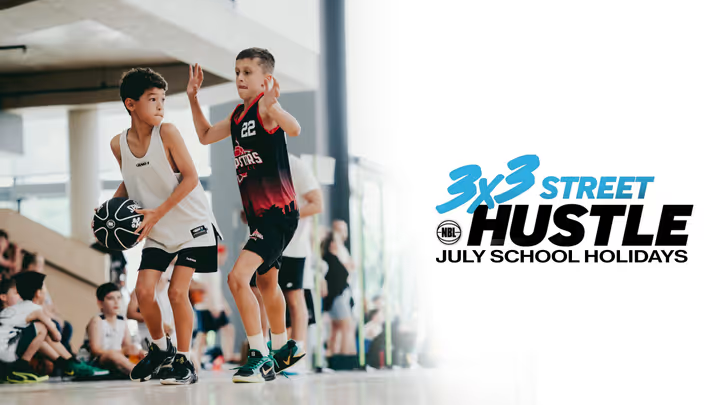
Hoops Capital to host 3x3 Street Hustle events
3 Jul
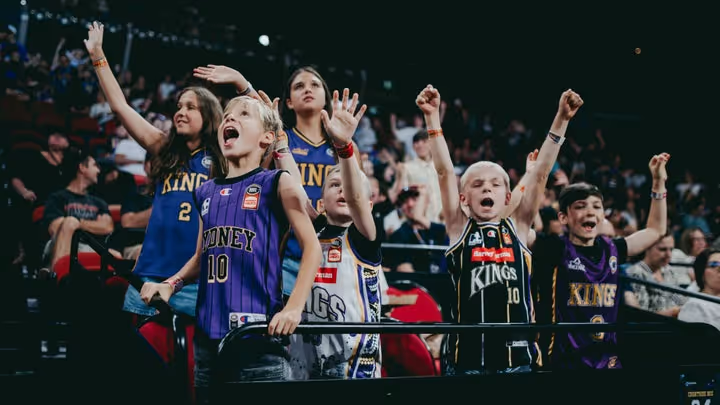
Kings memberships on sale for NBL26
3 Jul
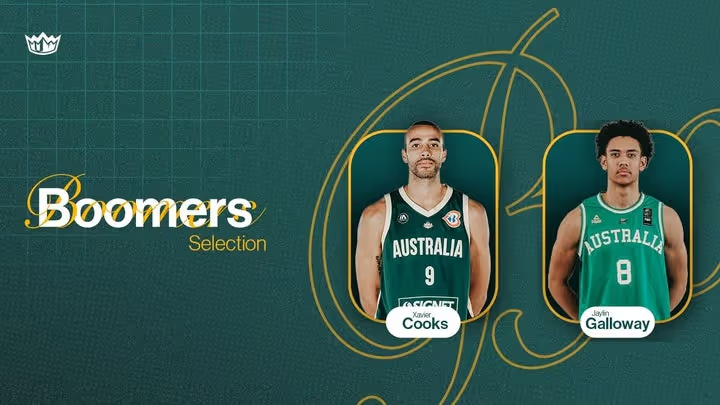
Cooks and Galloway named in Boomers squad
Jaylin Galloway
Xavier Cooks
2 Jul
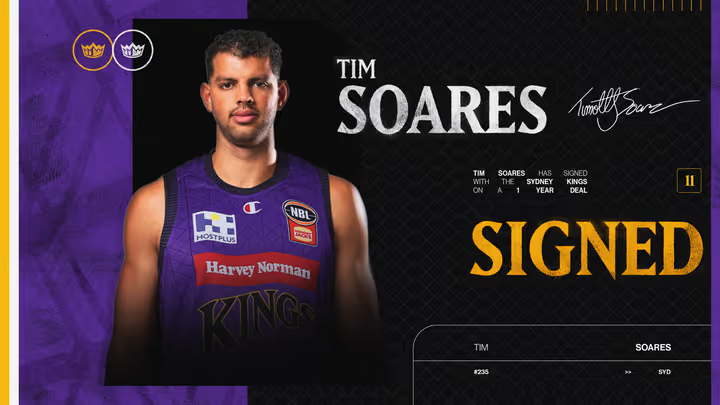
Kings welcome NBL23 champion Soares back to Sydney
Tim Soares
1 Jul
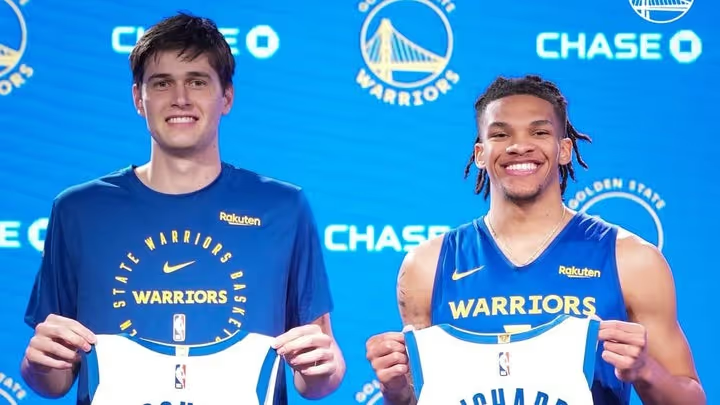
Toohey unveiled as Golden State Warrior
30 Jun
Hoops Capital off-season wrap (June 30)
Jaylin Galloway
30 Jun
NBA Summer League schedule revealed for Kings duo
29 Jun
Warriors strike gold with Toohey
29 Jun
Spurgin's NBL Select side clean sweep B.League United
Jason Spurgin
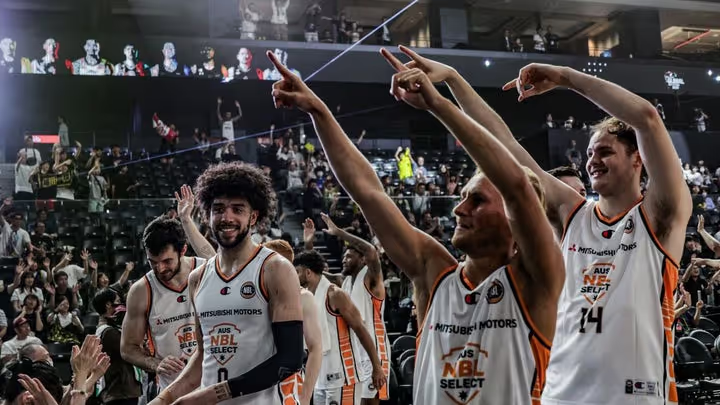
29 Jun
Spurgin's NBL Select team defeat B.League United in game one
Jason Spurgin
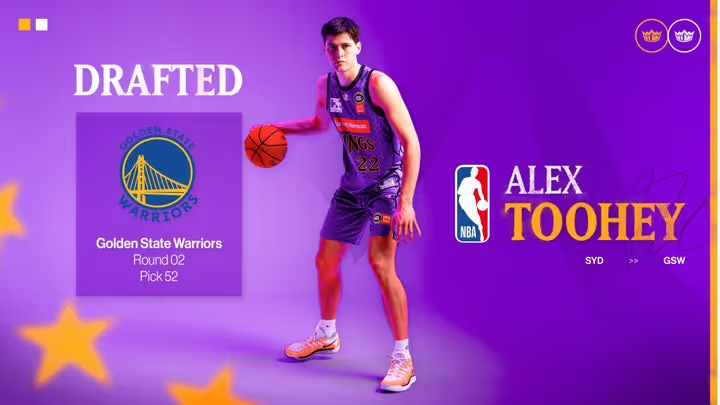
27 Jun
Toohey selected by Warriors in 2025 NBA Draft
26 Jun
Kings to face Bullets and Phoenix at Canberra's Blitz
24 Jun
Spurgin excited for opportunity to shine on international stage
Jason Spurgin
Support your team with the latest gear
Grab your latest team releases before they're gone.
Follow for behind the scenes content


Get the latest Team Updates
Breaking news & special offers. Direct to your inbox.
2026/27 Memberships Now Available
NBL Properties


Subscribe to our Newsletter
The National Basketball League acknowledges the Traditional Custodians of the lands on which we work, live & play. We pay our respects to their Elders past, present & emerging as well as all Aboriginal and Torres Strait Island Community. © year National Basketball League |Terms & Conditions | Privacy Policy